If you’ve been meaning to think seriously about aging in place but haven’t quite gotten around to it, you’re not alone — and the reasons are worth understanding.
Most people chalk it up to being busy, or feeling fine, or not knowing where to start. Those things are true. But they’re not the whole story.
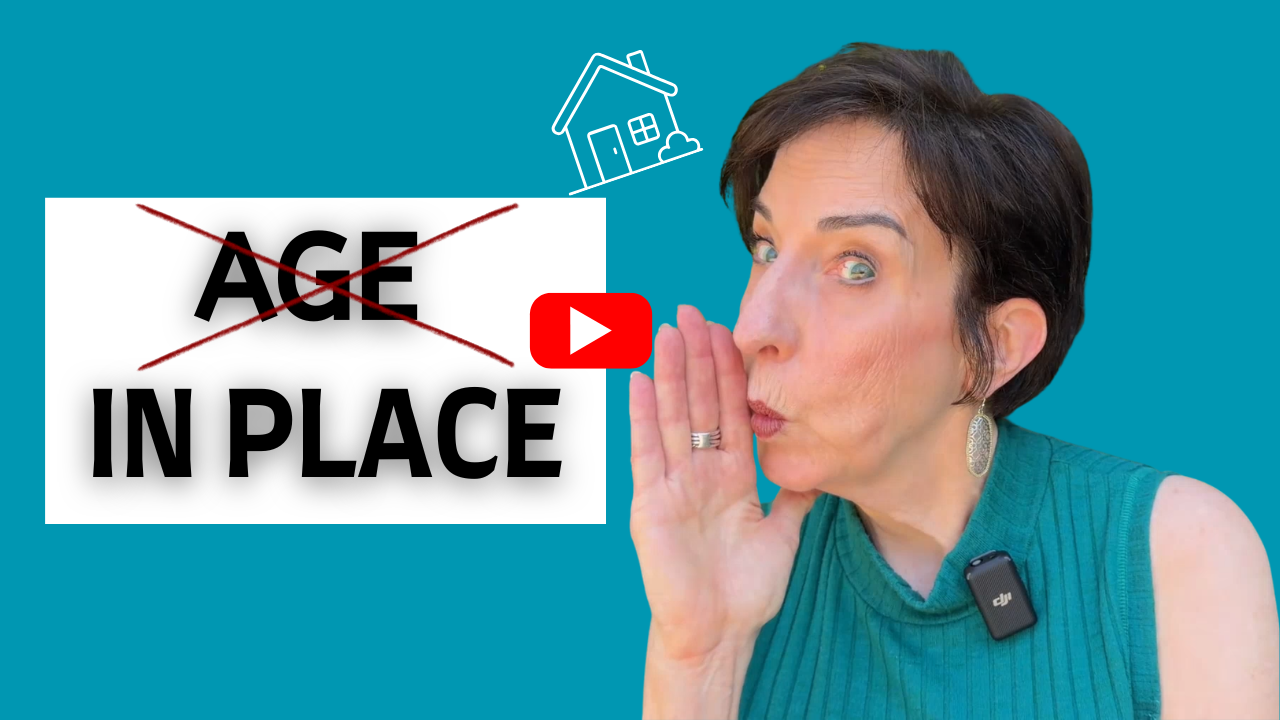
In my latest video, I talk about what’s actually behind the avoidance. You can watch it here, or keep reading for the highlights.
The excuses that aren’t really excuses
You feel fine now, so why rush? Things are busy. You looked up an AARP checklist once, found it completely overwhelming, and quietly closed the tab.
All of that is valid. But notice what those explanations have in common: they’re about logistics. They suggest that with enough time and the right checklist, you’d get this done.
Most people don’t get it done. So something else is going on.
The term itself carries baggage
“Aging in place” has an interesting origin. It came out of academic gerontology research in the 1970s and 80s, moved into housing and public policy in the 90s, and eventually got a formal definition from the Centers for Disease Control. The CDC described it as the ability to live in one’s home safely, independently, and comfortably regardless of age, income, or ability level.
Useful definition. Nobody designed it to resonate emotionally.
For most of us, the mental image that comes with “aging in place” is a reactive one — a parent who fell and needed a plastic shower seat bought in a hurry, or a friend’s guest bathroom that now looks more clinical than comfortable. These modifications happened fast, for someone in their 80s, without much planning. They weren’t what anyone would have chosen.
So if you’re in your 60s and feeling good, the logical conclusion is: why rush into that?
What’s actually driving the avoidance
Here’s what most people won’t say out loud. The real reason this keeps getting pushed to the back burner is that thinking about aging in place means thinking about aging — and that’s genuinely uncomfortable.
Preparing your home for a future version of yourself can feel like admitting something you’d rather not admit: that your body will change, that you’re not fully in control of what comes next. No wonder people avoid it.
What I’ve found, though, is that naming that discomfort is the first step through it. Once you can say, “I’ve been putting this off because I don’t want to think about getting older,” it starts to lose its grip on you.
What’s waiting on the other side
Women who work through this don’t describe the experience as giving in to aging. They describe clarity. Relief. The feeling of having dealt with something that had been sitting at the back of their minds for years — and now they can move forward knowing their home is working for them.
That’s a very different experience than the last-minute, reactive modifications most of us have witnessed with our parents.
What comes next
This is the first in a series of videos on aging in place — what it actually means, what it doesn’t have to look like, and how to start thinking about your own home in a practical way.
If you have a friend who might need to hear that it’s not her fault she hasn’t gotten around to this yet, share this post with her.